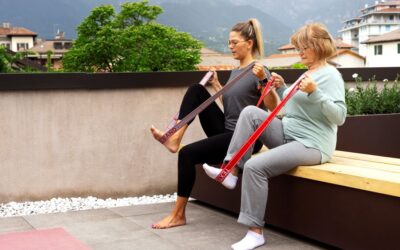
I’ve done my ACL… What do i do now?
So… based on the fact you’ve clicked on this, I’m going to make a wild assumption that you’ve injured your knee. Maybe you’ve even been told you’ve torn your ACL (I’m a genius, I know.) More importantly, you’re probably wondering where on earth to start. Good news—you don’t have to figure it out on your own.
I’m Michael, a lead physiotherapist (pretentious, I know) with a special interest in knee injuries, particularly ACL injuries. I’ve helped plenty of people through this process, from the day they did their knee all the way through to getting back onto the field.
Let’s answer the questions I get asked almost every week.
Where do I start?
This is probably the best question you can ask.
The answer? It depends.
(You’re already annoyed with me.)
The easiest way for me to work out the best path forward is to assess you properly. We call this triage, which is really just a fancy way of saying “working out the best course of action.”
During your appointment we’ll chat about:
- How the injury happened
- Your symptoms
- Your goals (because not everyone wants to get back to AFL)
- Your sporting history
- Then we’ll objectively assess your knee
From there we build a plan together.
That plan might include:
- Referral to an orthopaedic surgeon (don’t worry, I’ve got people that I can highly recommend)
- Organising an MRI if you haven’t had one yet
- Starting rehabilitation immediately—even if you’ve already booked surgery or you’re waiting to see a surgeon. There is ALWAYS something we can do that will benefit you.
- Referral back to your GP if we need Medicare referrals or there’s something else that needs investigating.
- Advice around braces or crutches. There are some injuries that I absolutely want braced—and braced ASAP.
Could you start with an MRI from your GP?
Absolutely. But, we don’t need the results immediately, we can start rehab.
Will my knee ever be the same again?
I actually hate this question.
Not because it’s a bad question—it’s completely understandable—but because I don’t think it’s what people are really asking.
What they’re actually asking is:
“Will I get back to the things I love doing?”
Football.
Netball.
Basketball.
Running.
Skiing.
Playing with the kids.
The answer is yes—it’s absolutely possible.
I’ve seen people come back playing the best sport of their lives after an ACL injury.
But…
It doesn’t happen by accident.
Whether you have surgery, follow a bracing protocol or manage your ACL without surgery, your outcome depends heavily on good rehabilitation.
Do I need surgery?
Ah yes. The million-dollar question.
You’ll probably hate my answer (again).
It depends.
The decision comes down to several factors:
- Your goals. What do you actually want to get back to?
- Your age and activity level.
- Whether your knee feels unstable or has “given way.”
- Whether you’ve injured anything else like your meniscus, MCL, PCL or other ligaments.
- Your personal preferences.
People often think an ACL tear automatically means surgery.
It doesn’t.
Likewise, avoiding surgery isn’t automatically the right answer either.
Every ACL injury is different, and that’s why having someone guide you through the decision is so valuable.
Can I walk after the injury?
Short answer?
Usually, yes.
Most ACL injuries are safe to weight bear, although you’ll often walk much more comfortably with crutches initially.
Sometimes a brace is appropriate as well.
There are exceptions, particularly if you’ve injured other structures in the knee, but for the majority of isolated ACL injuries, walking is encouraged.
What are the timelines?
Everyone loves timelines.
Everyone also hates hearing that they’re only guidelines.
Generally speaking:
Walking: Usually immediately after injury or surgery (often with crutches).
Running: Around 3-4 months.
Return to unrestricted sport: Usually between 9-12 months.
Some people progress quicker.
Some take longer.
Good rehabilitation isn’t about racing the calendar—it’s about ticking off milestones properly.
When should the swelling settle?
Swelling is completely normal after an ACL injury.
If you’re managing the injury without surgery, I’d generally expect most—if not all—of the swelling to be under control by around 6-8 weeks.
Following ACL reconstruction, swelling tends to hang around a little longer. Most people are much better by 12 weeks, although some residual swelling can persist beyond that.
If you’ve also injured your meniscus or another ligament…
Well… now you’ve made my job harder.
The timelines become much more individual.
The good news?
There is plenty we can do to help manage swelling and get your knee moving again.
Should I bend and move my knee after the injury?
Short answer?
Yes.
Or as I tell my patients…
Motion is lotion.
Because apparently rhyming phrases make complicated medical advice easier to remember.
In all seriousness, keeping your knee moving within comfortable limits is usually one of the best things you can do.
There are exceptions, which is why general advice should never replace an individual assessment.
Can you tear your ACL without knowing?
Surprisingly…
Yes.
Usually these are partial tears or lower-grade injuries.
A complete ACL rupture is much harder to miss.
They’re typically associated with significant swelling, pain, difficulty trusting the knee and often that famous “pop” people talk about.
Do I need to rush into surgery?
Not necessarily.
The main exception is when you’ve sustained a significant meniscal injury.
Particularly a bucket handle tear or sometimes a radial tear.
These injuries can occasionally lock the knee and often require surgery within the first week or two to give the meniscus the best chance of being repaired.
Fortunately, an experienced physiotherapist can identify the signs and make sure you get referred quickly.
If your main operation is an ACL reconstruction, I actually prefer giving the knee some time first.
Generally, somewhere between 4-12 weeks after injury is often ideal.
I know what you’re thinking.
“Why would I wait for something I know I probably need?”
Simple.
We want your knee to be as close to normal as possible before surgery.
A swollen, stiff knee that isn’t walking properly usually becomes…
A swollen, stiffer knee that walks even worse after surgery.
Prehabilitation matters.
Before surgery, the goals I want my patients to achieve are:
- Minimal swelling.
- Full (or very close to full) range of motion.
- Walking without a limp.
- Good early strength and control—for example, comfortably performing 10 single-leg sit-to-stands.
Getting these things right before surgery often makes the rehabilitation afterwards much smoother.
Are all ACL injuries and surgeries the same?
Absolutely not.
Every ACL injury has its own story.
Some tears occur right off the femur.
Some are through the middle.
Some come with meniscal tears.
Others involve the MCL, PCL, cartilage or additional ligament injuries.
Then we have different graft choices, different surgical techniques and different post-operative protocols.
This is exactly why rehabilitation should never be copied from someone else’s Instagram or YouTube video.
Your rehab should match your knee.
Can I get away without doing rehabilitation?
Honestly…
I don’t think so.
Could there be a few absolute cowboys out there who somehow manage it?
Probably.
Personally…
I’d leave the cowboy hat in the cupboard.
Whether you have surgery or not, rehabilitation is the biggest factor you can control.
The best outcomes usually come from having a good team around you.
That might include:
- Your physiotherapist.
- Your orthopaedic surgeon.
- Your GP.
- An exercise physiologist where appropriate.
- Friends and family who keep you accountable.
How much work do I have to put in?
Quite a lot.
ACL rehab is a marathon.
Not a sprint.
For the first six weeks we’re usually focusing on:
- Reducing swelling.
- Restoring range of motion.
- Walking properly.
- Building early strength.
The next phase becomes more strength-focused.
Then we prepare for running.
Then jumping.
Then change of direction.
All while spending plenty of time in the gym making that knee as strong as possible.
Around six months we might begin introducing elements of team training, depending on your progress.
Eventually we’ll complete return-to-sport testing.
Not because the calendar says you’re ready.
Because your knee says you’re ready.
That’s the difference.
Have more questions?
If you’ve recently injured your ACL and you’re feeling overwhelmed, that’s completely normal.
Whether you’ve already had an MRI, you’re waiting to see a surgeon, or you’ve got absolutely no idea what you’ve done, I’d be happy to help point you in the right direction.
Send me an email at michael@empower-ep.com.au. or book here
I aim to reply within 2-3 business days and, if it’s easier, I’m always happy to arrange a call.
Hopefully this article has been helpful.
Good luck!
MICAHEL ESHETU
Physiotherapist